Background
Our Lord identifies Himself as the Good Shepherd who cares for His sheep. That particular image, that expression, as it’s called in verse 6 maybe needs a bit of an explanation for us as to its context so that you know why it was spoken and recorded here.
Earlier Jesus had been in a confrontation with the leaders of Israel. And they had rejected Him, and they had declared their hatred of Him, and they were on a course to kill Him. Jesus had escalated this conflict by telling them a truth. He said to them: “You are of your father, the devil.” ‘He is a liar and a murderer, and so you are liars and murders as well]. As a result, scripture tells us: “Therefore they picked up stones to throw at Him. Jesus hid Himself and went out of the temple.”
On His way out of the temple, He saw a blind man. By then, His enemies, the Pharisees, had caught up with Him. Well, Jesus healed the blind man, and then the blind man came to faith in Him.
The man was healed physically, and he was healed spiritually. And as a result of that, he violated the Pharisees law. Because he had confessed that Jesus was his Messiah, Lord, and Saviour. Consequently, the Pharisees threw him out of their synagogue, and they sought to kill Jesus.
The healing of the blind man, in a sense, sets the scene for this morning’s reading. The hostility of the Pharisees has passed the point of no return. They had, in fact, demonstrated themselves to be false leaders who, instead of acknowledging their Messiah, rejected their Messiah, and even worse had wanted to execute him. These were, the false shepherds of Israel that Jesus referred to.
Jesus pronounced a judgment on them because of their blindness, because they were wilfully blind to the truth. The conversation, specifically with them, ended with these words, when Jesus told them: “Your sin remains.” You are anything but righteous. You are in your sin.
As so, we come to this morning’s reading, Jesus is still talking to those Pharisees. They are still there. The blind man is still there. The disciples are still there. The crowd of Jews is still there by the location where the healing took place. Jesus then launched into a description of how a good shepherd conducts his life with his sheep.
Contrary to the false shepherds the Pharisees who are the strangers, who are the thieves, who are the robbers. The true Shepherd cares for His sheep. He has his own sheep, he has the responsibility to care for those sheep, he puts them in a safe place, he calls them out of the fold, he calls them by name, he names them, they know his voice, they follow him, they don’t follow a stranger, they have to be protected from the danger of thieves and robbers, they are led out by the shepherd to places where they can eat and drink. That is a good shepherd. That is a picture of salvation.
Introduction
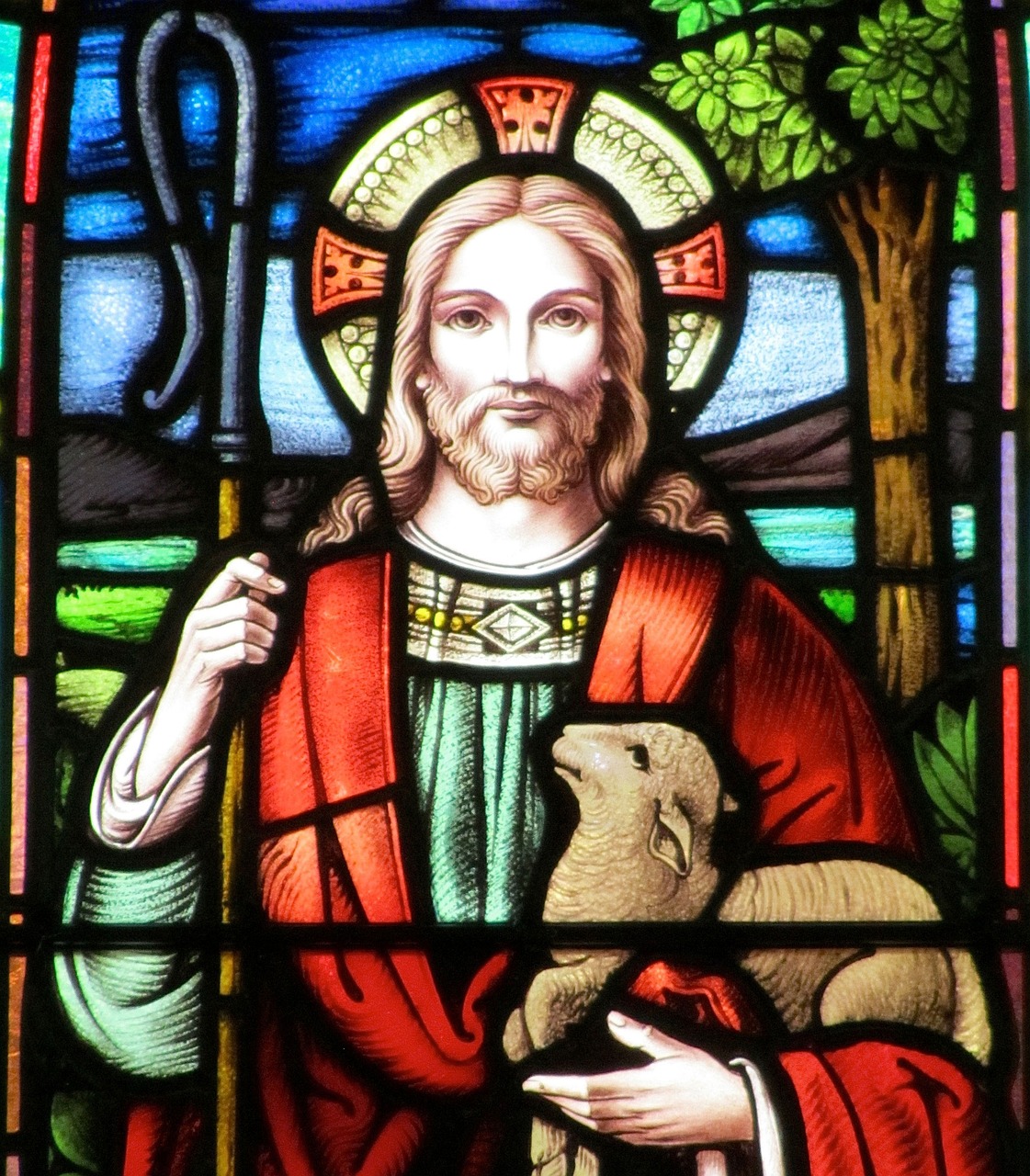
Today is known as “Good Shepherd Sunday.” The Fourth Sunday of Easter every year is a day when we remind ourselves that Jesus is our good shepherd. But in the gospel reading assigned for today, John 10:1-10, Jesus doesn’t actually say that. He says it right after today’s reading. What he says in today’s reading is that he is the gate for the sheep. Jesus tells us: “Very truly, I tell you, I am the gate for the sheep.”
This is one of the famous “I am” sayings of Jesus. There are seven such sayings in John’s Gospel: “I am the bread of life … I am the living water … I am the light of the world … I am the way, and the truth, and the life … I am the true vine … I am the resurrection and the life … I am the good shepherd …” And today’s, which I think is the least well-known and must unique: “I am the gate.”
Many of these “I am” sayings of Jesus’ have obvious meanings. But today’s “I am” saying is not quite as obvious. What does it mean that Jesus is the gate, or in other translations, the door, for us, his sheep?
Jesus declares Himself as the gate for the sheep, offering salvation, protection, and abundant life to those who follow Him.
Understanding the Passage
Jesus uses the imagery of a sheepfold to teach about His relationship with His followers. He begins by contrasting those who enter the sheepfold properly with those who climb in by other means: “The one who does not enter by the gate but climbs in by another way is a thief and a robber” (John 10:1). This highlights the danger of false leaders and deceptive influences, emphasizing that true access to God comes only through Christ. And for our modern ears I will provide yiu with an example.
In their book, ‘The Counterfeit Kingdom:’ Holly Pivec, and Douglas Geivett talk about the dangers of so-called New Revelation, New Prophets, and New Age Practices in the Church.
These movements are very popular and fast-growing today, all emphasize signs and wonders, and teach that God is giving new revelation through new apostles and new prophets. These key beliefs distort the gospel, twist the Scriptures, and lead faithful Christians to shipwreck their faith. The authors assert that what used to be on the fringes of the church is now mainstream, and many are being influenced by it unaware of these false practices and teachings.
Jesus then identifies Himself as the gate: he says “I am the gate. Whoever enters by me will be saved, and will come in and go out and find pasture” (John 10:9). This image conveys several truths: Jesus provides salvation, guidance, and provision for His followers. The sheep recognize his voice-the shepherd’s voice, and follow Him, illustrating the close relationship between Christ and believers,
The Promise of Abundant Life
Jesus contrasts the intentions of the thief with His’ mission: he tells us that: “The thief comes only to steal and kill and destroy. I came that they may have life, and have it abundantly.” Jesus offers not just survival or safety, but a full, meaningful, and spiritually rich life. This abundant life is found in obedience, trust, and fellowship with Him, rather than in so called material wealth or worldly success.
Practical Applications
Discernment: Believers are called to recognize the voice of Christ and avoid false teachings or influences. Listening to the Shepherd requires attentiveness and spiritual sensitivity.
Trust and Obedience: Following Jesus means entering through the gate, trusting His guidance, and relying on His protection.
Abundant Living: True fulfillment comes from a relationship with Christ, who leads His followers to spiritual nourishment and purpose.
Shepherds call their sheep by name and lead them to pasture, showing personal care and guidance. Similarly, Jesus knows each believer personally and leads them in life’s journey.
The gate image also reminds us that access to God is exclusive through Christ, echoing the “I AM” statements that reveal His divine authority.
Conclusion
John invites believers to enter through Jesus, the gate, to experience salvation, protection, and abundant life. It challenges us to discern His voice, follow Him faithfully, and embrace the fullness of life He offers, resisting the distractions and dangers of the world. By trusting the Good Shepherd, we find security, guidance, and spiritual richness that surpasses all earthly pursuits. Amen.